About Ohel Ayalah

people1jpgWho should attend Ohel Ayalah?
Nature of Services
Rabbis and Cantors
Schedule
Reservations
Ohel Ayalah History
Why "Ohel Ayalah"?

Ohel Ayalah offers a free, walk-in service to meet the needs of many Jews, in particular young Jews, who do not have a place to pray on the High Holidays.

Most synagogues require the purchase of a ticket to attend their High Holiday services. Ohel Ayalah does not. Ohel Ayalah believes the Jewish public should be able to worship at services that are free and open to all. Every Jew should be embraced. However, we respect the need of synagogues to charge fees to help defray the costs of their High Holiday services.

Many Jews in New York City do not attend services on the High Holidays. Ohel Ayalah seeks out these Jews, whether they are young people in their 20s and 30s who do not feel comfortable in an established synagogue, whether they are Israelis or Russians who feel separated from established Jewish life, or whether they are interfaith couples or Jews-in-the-making. We want to offer all such Jews a communal prayer experience and make it possible for them to live Jewishly on Rosh Hashanah and Yom Kippur.

At Ohel Ayalah, it is possible for a Jew to wake up on Rosh Hashanah morning and say, “I feel like going to the synagogue today and being with other Jews.”

The free, walk-in service at Ohel Ayalah means that a Jew can join a celebration of the High Holidays without having to decide in advance. Every Jew should feel welcome in a synagogue on the High Holidays, whether or not he or she is a member, whether or not he or she made advance arrangements to attend, and whether or not he or she purchases a ticket. This is the mission of Ohel Ayalah.

top of page


Who should attend Ohel Ayalah?

Ohel Ayalah reaches out to people who are not already connected to the Jewish community or its institutions. We imagine that there are many American-born young people, in their 20s and 30s, no longer on campus, who might, spontaneously, decide to “do Jewish” on Rosh Hashanah and Yom Kippur. We imagine there are many Israelis and Russians who also may choose, at the last moment, to find a place to spend “Jewish time” on the High Holidays. Ohel Ayalah will create an instant community for those Jews who celebrate the High Holidays with us. We have room for 230 people. One hundred people may reserve in advance, but there will be plenty of seats for walk-ins. We are not offering this worship service to people who already attend a synagogue. Inter-faith couples are welcome.

top of page


Nature of the Service

in-seats.jpgThe service will be egalitarian — both men and women will lead –­ and traditional. The prayers will be chanted in Hebrew, their language of composition, but there will be interspersed English explanations, comments, and readings. We will sing together, talk together, remain silent together, laugh together, break bread together, and study together. The service will aim to be awe-inspiring (literally), and, at the same time, warm and engaging. Your participation will be a key component in creating a community and a meaningful atmosphere.

top of page


Rabbis and Cantors

In Manhattan:
Rabbi Judith Hauptman, a professor of Talmud at the Jewish Theological Seminary, will lead the services, together with Student Cantor Josh Gorfinkle.

In Brooklyn:
Rabbi Josh Cahan will lead the service, together with Ba’alat Tefilah Arielle Rubenstein .

top of page


Schedule

On the first day of Rosh Hashanah, Tuesday, September 30, the service will begin at 9:00 a.m. and end about 12:15 p.m. After services, there will be a light lunch followed by an informal session on a topic of Jewish interest. Rabbi Judith Hauptman will present, Everything You Wanted to Know About Jewish Marriage in 30 Minutes. You are welcome to come to any and all events of this day of Jewish experience.

On Kol Nidrei night, Wednesday, October 8, there will be two services. The first will begin at 6:15 p.m. and end about 8:00 p.m. The second will begin at 8:15 pm and end about 10:00 p.m. The second service is all walk-in.

As in 2007, there will be a Ne’ilah service at the end of Yom Kippur, on Thursday afternoon, October 9, at 5:45 p.m. It will be followed by a modest break-fast.

top of page


Reservations

At the Rosh Hashanah service, on Tues September 30, 100 seats may be reserved. Reservations will be held until 9:50 a.m. All other seats, about 110, are for walk-ins. Similarly, on Kol Nidrei night, Wed October 8, 100 reservations will be taken for the first service. The rest of the seats are for walk-ins. The second Kol Nidrei service is all walk-in. And the Ne’ilah service, with break-fast, is all walk-in.
MANHATTAN RESERVATIONS ARE CLOSED. Click here to make a reservation for Brooklyn.

top of page


Ohel Ayalah History

Founded by Rabbi Judith Hauptman, Ohel Ayalah opened its doors in 2004 on Rosh Hashanah. Nearly 200 seats were filled, about two-thirds by people under age 35. On Kol Nidrei night, there was standing room only, with a crowd of 250. Many who attended the Rosh Hashanah service returned, some bringing friends.

food.jpgThese numbers clearly demonstrated that the services met a real need for Jews who wished to feel “Jewish” and be part of a community during the High Holidays.

On Pesach 2005, Ohel Ayalah held a low-cost, first night Seder. It was fully subscribed. The 162 attendees were mostly under 35 or over 60, with few families and young children. Participants commented that they had found the kind of Seder experience they were seeking–traditional and contemporary at the same time.

In the fall of 2005, the Ohel Ayalah Rosh Hashanah service overflowed. On Kol Nidrei night, a second service was held, right after the first. The combined attendance was about 380. On Passover 2006, Ohel Ayalah again sponsored a first night Seder, and it again sold out.

In the fall of 2006, the Ohel Ayalah HH services were oversubscribed, in particular the second Kol Nidrei service. People sat, stood in the back, on the sides, in the front, wherever. And in April 2007, Ohel Ayalah sponsored two Seders. The first was a Seder for all ages and so people in their 20s showed up, as well as people in their 90s! The “new” second night Seder, for people in their 20s and 30s, succeeded in attracting 100 of them.

In the fall of 2007, Ohel Ayalah was not only filled to capacity on Rosh Hashanah and Kol Nidrei night, it even had to turn people away–to the great dismay of its rabbi and cantor. New in 2007 was a Ne’ilah service at the end of Yom Kippur. About 150 people showed up for it and for the break-fast that followed. And in April 2008, Ohel Ayalah again sponsored two Seders: the first night for all ages and the second night for people in their twenties and thirties.

top of page


Why is it called Ohel Ayalah?

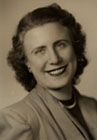
Helen Hauptman
Helen Leventhal Hauptman
1910-1956

Rabbi Judith Hauptman has named this minyan Ohel Ayalah (Tent of Helen) in memory of her mother, Helen Hauptman. She died in 1956 on Kol Nidrei night; she was a loving mother, a high school teacher, and an active member of her synagogue.

top of page